Address
304 North Cardinal St.
Dorchester Center, MA 02124
Work Hours
Monday to Friday: 7AM - 7PM
Weekend: 10AM - 5PM


Our mission goes beyond raising awareness.
We are here to provide comprehensive support, from diagnosis to treatment, from emotional care to social visibility.
Because we believe:
No matter how rare the disease, no one should have to face it in silence.
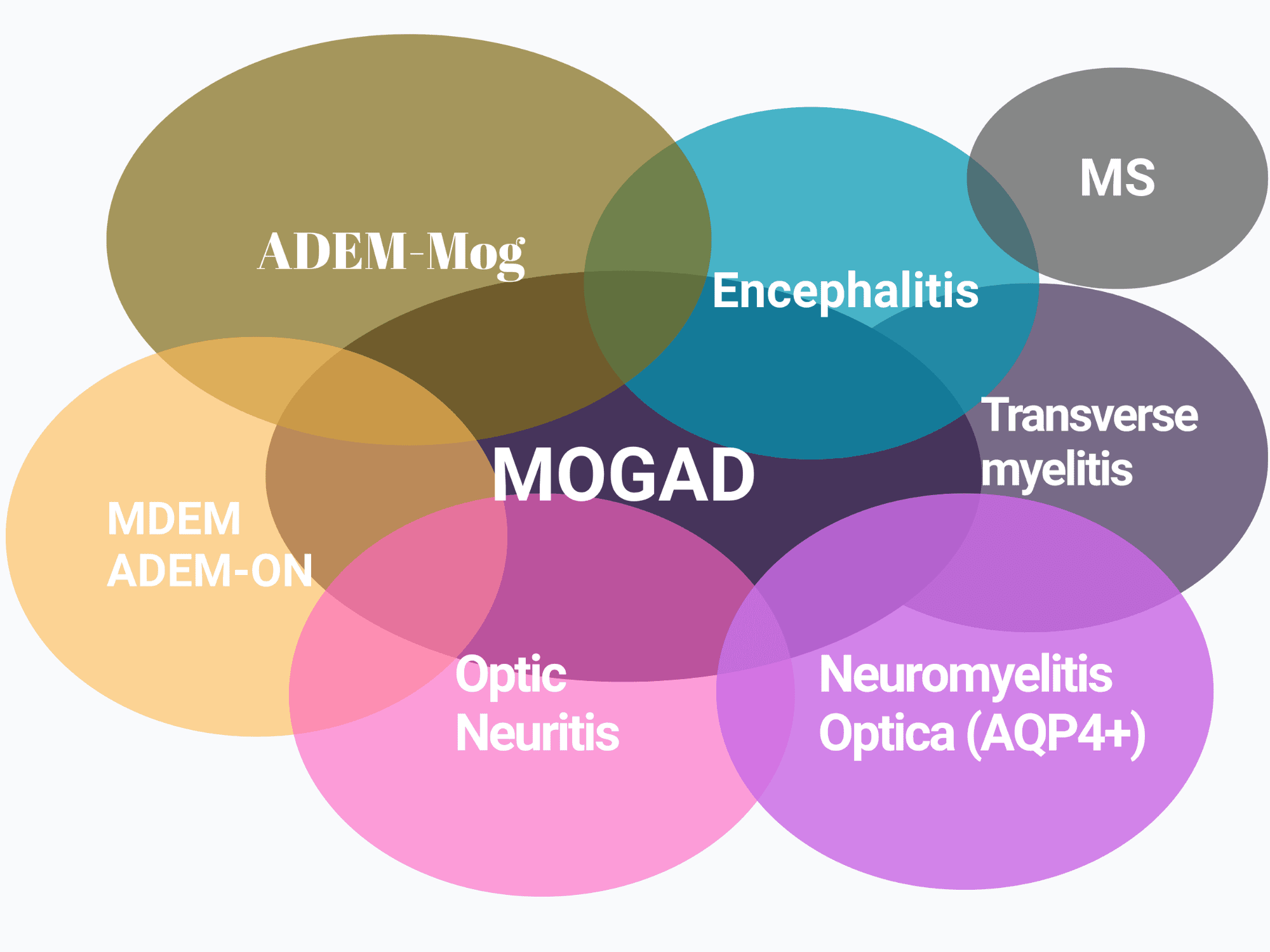
MOGAD is an autoimmune demyelinating disease caused by antibodies targeting myelin oligodendrocyte glycoprotein (MOG). It does not present in a single, uniform way. Instead, it exists on a clinical spectrum.
It may appear as optic neuritis, causing vision loss and eye pain.
It may present as transverse myelitis, leading to weakness, sensory changes, or mobility difficulties.
In children, it can resemble acute disseminated encephalomyelitis (ADEM), often with encephalopathy and widespread brain inflammation.
In some cases, it may manifest with cortical encephalitis, seizures, or cognitive and behavioral changes.
Because of this variability, MOGAD can mimic conditions such as encephalitis, multiple sclerosis (MS), or neuromyelitis optica spectrum disorder (NMOSD). However, it is a distinct antibody-mediated disease with its own diagnostic and clinical profile.
Diagnosis requires careful evaluation, antibody testing, and expert interpretation. Each patient’s experience is unique.
MOGAD may be invisible — but its impact can affect vision, mobility, cognition, and quality of life.
Understanding the spectrum is the first step toward recognition, accurate diagnosis, and appropriate care.